Showing posts with label Tips. Show all posts

Friday, January 27, 2017

Attacking Soccer- Goalies

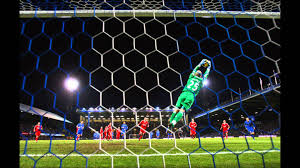
The goalie position isn't probably the first position you think when you sign up for soccer. You want to be involved with the action and be on the field. But the goalie position is just as important as the other positions. Why is this so? Well they prevent the opposing team to score and they put themselves in risk with balls flying towards them at top speeds. If they didn't do their jobs, your team may not have a chance of winning.

Now if you are thinking of choosing this position, there are a few things you have want to keep in mind.

1. When practicing, you should have the players shoot from both sides so you can build technique for both sides and not just one side.

2. You should have the ability to distribute with the hands quickly, accurately, and over distance. Top keepers make a save and quick distribute to a teammate to begin a counterattack.

3. Foot movement is just as important as hand movement. Footwork skills include long and accurate goal kicks, punts, dropkicks, and the popular side volley kicks and of the course the ability to receive balls, make good player decisions and connect passes in and around the keeper's defensive third or when needed, up field.

With this information, you know that the goalie position isn't as boring as you think. They don't just stand there the whole time, they get a lot of training and you need to have specific skills to be a goalie. 

Question: After reading this blog, would you think of being a goalie? If not, why?

Saturday, January 21, 2017


 Back- At You


               Some people find that the backhand can be difficult to master because it is hard to learn how to gain control and have accuracy with this shot. In the beginning I struggled with this technique as well because I felt like I never had control. This shot can be hard to master if you don’t know the best tips and techniques for getting the shot down.


               One thing, I learned on how to make a backhand shot easier to control and how to create more force is the way you position/ place your hands on the racquet. Most people will place their hands apart on the racquet which makes the racquet go against itself, so when you do hit the ball with this shot, your swing won’t be controlled since one hand is trying to hit the ball one way and the other hand is trying to hit the ball in a different direction. So in other words, they are going against each other when your hands are apart on the racquet like the image on the left.


               I learned that when you are doing a backhand shot is that you should either interlock your hands together or have them right on top of each other. This will cause more control and force when you hit a ball coming at you. When you have your hands together this will have them work together as “one”. They will hit the ball from the same direction and not go against each other like they would if you were to have your hands spread apart on a racquet. This will create stronger support when the racquet comes into contact with the ball, as well as give you an easier shot. Once, I began using this technique more I found it to be more successful and easier to gain control on where I want my balls to return. Some people found that with this technique of interlocking your hands with this shot, it may seem a little more difficult for you to be ready for the next shot after the backhand, when you may need a different position, but with time and practice you will soon get used to the transition of your placement with your hands.


Another thing that you should do when you are coming into contact with the ball on your backhand shot, is that you need your arms to be extended/straight and not crammed against your body. If your arms are straight, it allows more room for your swinging motion and to be able to do your follow-through. When your arms are close against your body you won’t get the full swing, which can cause a weak shot or end up going out.


               An additional tip, I found useful when reading the book was that, “If you have a rotation right, you will rotate through the stroke so that your follow-through takes you back to facing the net” (McCloud 24). When you do your backhand you want to be in a stance that allows you to feel balanced, as well as powerful. So, what he is saying is that when you rotate, you want to have that stance and your arms swinging all the way through in order for it to be powerful and a successful shot. When they say follow-through, that typically means that you will start your swing down by your side with the racquet facing its strings down and when you are about to hit the ball you will gradually raise your racquet up and have the racquet string’s face to the side to carry the shot upward as the ball comes into contact, then you will come up with the swing and even after the ball has been shot over the net you are going to continue with that swing. The racquet should end up by your ear for an effective shot.


               For me, that was something I struggled with because I kept forgetting to follow-through with my swing, which led to a weak shot. Once, you continually practice with the follow-through it will become more natural and you will notice your shots becoming more successful and they will glide over the net, which will give you an advantage. With the backhand you will also need to get your timing down as well because you need to prepare for when the ball comes. If you aren’t prepared and don’t have your racquet facing down and ready to carry the ball up, then it will either pass you or you will swing randomly, which I bet will be an easy shot for your opponent or the ball will go out making you lose the point.


               I know I have repeatedly mentioned timing with each post, but that is very crucial in the game of tennis, whether it’s preparing for a shot or serving. Also, don’t get frustrated right away, when your backhands don’t make it over or they aren’t controlled, it takes time to get your backhand shot down. That is something I struggled with in the beginning, but with time and consistent practicing I began to feel better with my shots. I hope these tips are helpful for you, like they have been for me.


Question: When you do a backhand shot, which do you prefer, your hands apart or close together on the racquet’s handle and why one over the other?