Showing posts with label Soccer. Show all posts

Saturday, January 20, 2018

soccer knowledge

Soccer by Jenny Mackay 

With any sport, you have to be safe while you play. There are always rules that will restrict some things in order for the players to be safe. In soccer there are also shin guards that you wear under your socks that is required but other than that there really isn't any more equipment that is required to keep you safe on the field. Being a safe player not only benefits you, but the players around you because you will not hurt anyone and you will not hurt yourself in the process.

Soccer is known to having a lot of head injuries, you have to head the ball a lot during the game if you want to win a ball in the air then you will have to be first to the ball while you are in the air since you will have to jump in order to get to the ball before your opponent. This will cause you to be unbalanced which can lead to landing in a bad way or you may get hit by your opponent who is also trying to get the ball. 

Players are taught to step on the field with no fear while being safe and to always put their body first. Whenever you go for the ball, in the air or ground, you should go in strong and not scared to get hurt because if you play scared then you will eventually will get hurt so its better to go in with your feet well planted. 
Here is a picture of me fighting for the ball and as you can see my feet are well planted and my body is in front of the girl so that I can defend the ball and make it hard for her to get to it.


Do you think soccer players should be required to wear more protective gear? 

Friday, December 29, 2017

Soccer Knowledge

Soccer by Jenny Mackay

Something important to know about soccer is that it asks for your body to do a lot therefore it is very important to eat good. Even the top professional players can not just rely on their strong muscles, they will perform better if they are giving their body the essentials it needs to be able to play.

Hydration is key to making sure your body is ready to play. It is good to drink water not only when you are going to play but even a day before that to prep your body. It is not good enough to drink lots of water on the day of your game. Water helps bring oxygen to the muscles and helps them contract quickly. A snack in between games is a good idea because it will give you energy, something like an orange or an apple with peanut butter.

All the healthy foods you can think of will help in the long run when playing soccer, it will help you feel better when playing and help you play to your fullest potential. Without these things your body can only do so much but with the right food you will be able to keep improving your skills and growing, not only physically but on the field as well.


What is your favorite healthy snack to munch on?

Thursday, December 21, 2017

Soccer Knowledge

Starting out!

I have been playing soccer since I was 6 years old and its the only sport that's ever interested me. It is also interesting to me to find out things about the sport that I didn't know before, the more you know about the game, the better! In the book Soccer by Jenny Mackay it says, "...and the roots of the game may be as old as the human race itself." There is so much you can learn about the sport you love when it has been around for so long. 


Soccer has been all over the place since the earliest times including The Americas. Europe, and Asia. The rules have changed since those times. For example, in the English schools back then you were allowed to touch the ball with your hands but everyone now knows that is not okay unless you are the goalkeeper. The no hands rule has always been the most controversial. 

Soccer is a very popular sport today and is celebrated all over still. The more you learn about the origins and history of soccer you can see why people get so passionate in playing and watching the sport. It is a big part in a lot of peoples lives and culture. In the next posts I will be sharing the basics of soccer and give you the knowledge you need to go out and try it!

If you have never played soccer before would it interest you to try it? Why or why not?


Sunday, December 17, 2017

Dog Training - Playing Soccer

Geller, Tamar, and Jonathan Grotenstein. 30 Days to a Well-Mannered Dog: the Loved Dog Method. Gallery Books, 2011.

12/17/17

Dogs and soccer are my two passions in life, so when I found a chapter on playing soccer with your dog, I knew I had to try it. I know she won't be able to bend it like Beckham, but teaching her how to swat the ball into a designated area will hopefully be an attainable goal. Marcy has a short attention span, but when treats are involved, she will most likely stay focused on the task at hand. 

To start off, Geller (author of 30 Days to a Well-Mannered Dog) states, "Many dogs will instinctively understand the game - kick around a soccer ball for a few seconds and gently pass it to your dog" (Geller 269). Most dogs will learn from mirroring actions. As I lightly tapped on the soccer ball a few times, I held a treat out in my hand so that she would remain attentive. I later tapped the ball over to Marcy. I held the treat near the "goal." On the first time around, Marcy would leave the ball and go straight for the treat. I would then have to hide it and point to the ball. At some point, I had to slowly dribble the ball into the "goal" a few times and show her the treat at the end. 


Geller had later mentioned that it would help to have a clearly defined line for the goal. I set a colorful ribbon on the floor as the goal and started the process over. It still took a few tries for Marcy to grasp the idea of touching the soccer ball forward, but eventually she was able to swat at the ball enough times to get it over the line. As soon as she reached the goal, I rewarded her with a treat. I had her practice going through the goal several times before moving on. 

"As he begins to understand what you're asking him to do, slowly increase the distance he's got to roll the ball in order to get a reward" (Geller 269). I began starting her at a further distance from the goal, guiding her along the way so she would stay on the right track. She would often miss where the goal was located, so I used the treat to guide her instead. When she finally found the goal, I rewarded her with the treat immediately. But if she tried going for the treat while leaving the ball, I had to take it away immediately so she knew that only the ball getting over the line would get her a reward. Similarly to my previous post, I tried putting her in different rooms (like how I had given Marcy different targets) so she wouldn't get used to only doing the drill in one specific environment. 

Overall, the pace of her learning wasn't very surprising. I expected her to take quite a while to get the hang of it, but hopefully in the future she will start catching on a little sooner. She learned to play a fun activity that I could enjoy as well and do alongside her. She also learned how to work towards a fixed goal to earn a reward. This can later translate into her learning how to go to a certain place when I tell her. In my opinion, patience is key when teaching your dog new things. 

What do you think is key to teaching your dog (or anyone for that matter) something new?
If you don't play soccer, what other sports do you think you could teach your dog?
At what pace does your dog usually learn things at?


Friday, January 27, 2017

Attacking Soccer- Goalies

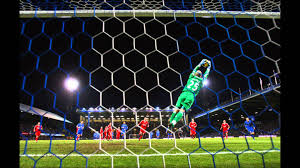
The goalie position isn't probably the first position you think when you sign up for soccer. You want to be involved with the action and be on the field. But the goalie position is just as important as the other positions. Why is this so? Well they prevent the opposing team to score and they put themselves in risk with balls flying towards them at top speeds. If they didn't do their jobs, your team may not have a chance of winning.

Now if you are thinking of choosing this position, there are a few things you have want to keep in mind.

1. When practicing, you should have the players shoot from both sides so you can build technique for both sides and not just one side.

2. You should have the ability to distribute with the hands quickly, accurately, and over distance. Top keepers make a save and quick distribute to a teammate to begin a counterattack.

3. Foot movement is just as important as hand movement. Footwork skills include long and accurate goal kicks, punts, dropkicks, and the popular side volley kicks and of the course the ability to receive balls, make good player decisions and connect passes in and around the keeper's defensive third or when needed, up field.

With this information, you know that the goalie position isn't as boring as you think. They don't just stand there the whole time, they get a lot of training and you need to have specific skills to be a goalie. 

Question: After reading this blog, would you think of being a goalie? If not, why?

Attacking Soccer- Passing tips

Passing is the one of the most important parts of soccer. It's simple but it's difficult skill to master, there are three main tips that can help you accomplish this task.

Vision

If you know where you are passing, its more efficient. Vision can help you find open players on your team to pass to and it gives you the ability to know what is happening on the field at all times. It can improve your technique, which is a ability you need to get out of tough situations.

Pass Often

When you are in a game, it is good to pass the ball often so the opposing team doesn't have more time to think of a way to get the ball back. Passing often can also get the ball
down the field faster and more effectively than just keeping the ball to yourself and attempting to get the ball all the way down the field. Going along with passing often, you should also pass fast because it will give less time for the opposing team to mark you and your teammates.

Through Passing

Using this pass can be deadly, but a good passer always sees opportunities for through passes. To make this pass, you would use a chipped pass so the other teams won't get a chance to intercept it. A chipped pass is kicking it into the air towards the target you are aiming for.


Question:
Out of three tips, which do you think is most important? Would you ever attempt a through pass?

Thursday, January 12, 2017

Soccer: Be Strong In The Air


I've only really took part in one single sport very intensely and that is soccer, I play other sports with friends just for fun but my main sport is soccer and always will be. The first time I got on a soccer field I totally fell in love with the game and thought that this really showed who I am and it let me just be free and do what I think is right on the field. The part that really pulled me into playing soccer was the competition that fires up, when most games do usually go 0-0 for a while that competition keeps on going up and up and all the players get more feisty and that energy is remarkable on the field that I can never find anywhere else. I love being part of that aggression and fight because that's just the way I am and that's why I found soccer to be such a perfect fit for me to play. Whenever I'm down or sad I go out to a soccer field with friends and just kick the ball around for a while and it clears up my brain and that's why I found it to be one of my biggest passions too, because it helps me with other aspects in life as well, like brings happiness. Soccer is mainly played with your feet and legs and for goalkeepers hands are significant. However, a major part of soccer that people that aren't involved in playing it miss out usually are headers and the ability to use your head whenever it is needed. That is a very overlooked skill in soccer and it is hard to perfect but the one's that do perfect headers and the touch of the ball on their head they go to a different level of ability as a soccer player. So, to learn more about headers and being strong in the air I chose to read a soccer book called "Soccer Strategies: The Top 100 Best Ways To Improve Your Soccer Game," by Ace McCloud for my 2nd quarter IRP project. I've been playing soccer competitively now for a very long time and headers are one of my personal favorite things in soccer. Even though I'm usually smaller than most of the opposing team members in height, I show everybody that I have more heart and desire to make that ball mine and put my head on it first before anyone else does so it ends up in the back of the net. But, that is a lot harder to do then to say in a game situation because everything happens so fast that you have to be naturally ready and anticipate where the ball is going so you can aim your header where the goalkeeper can't reach.

In the book by McCloud he does talk about headers and how to improve your ways to get them in the goal more often. He informs us in the book by talking about the best way to score a header is make a move on your defender, get past him, spike the ball down and with a lot of pace towards the corners so it is the hardest on the goalkeeper to reach, (McCloud 16).


This was the video of my header before I came across the section of the book with the headers and read what McCloud had to say about them. What I'm doing wrong here is that I was muscling up the defender that was guarding me but I let him get a step in front of me which made me had to back off for a second and that let him beat me to the ball and clear it out before I could come close. The better thing for me to have done here was keep muscling the defender up which is allowed in the rules of the game but also accelerate quicker so that my body would be in front of him and he wouldn't have been able to get in front of me to the ball.

This was the header I came out with after I read the book and took in what McCloud had to say about improving them. In this header I did all the right things basically and it was way better than before when I hadn't had read the book. First, I muscled up my defender well and that got me a little step on him. Then, I exploded with speed towards the ball to leave him completely behind me with no challenge in the air. Finally, I turned my body enough to where the ball would come down on to my forehead, which is the best place to head the ball, and then spiked it down into the corner just like McCloud said to do. That was a really good example of how to score a header from a ball delivered into the box.


Here is a different but another good example of how to head the ball properly. This header is different because the approach I had to my jump was different than the previous one. In the last one I was muscling up my opponent and then took a step ahead of him, however in this one I couldn't do that because the ball was put closer to the goal so I had to get there quicker. So what I had to do was take a big stride in front of the defender and having the ball in the corner of my eye and then attacking it with full force so I get as much pace in the ball as I could and the goalkeeper wasn't even able to get his hand down towards it before it already went into the back of the net. Clearly, in game situations you have to adapt to what is being thrown at you so practicing every scenario is very important and when it's game time you are prepared for anything that comes up.


McCloud's book has been huge for my knowledge about the game and he has taught me many different skills and techniques that I wasn't thinking about at all before when they are really helpful. Another thing he said about headers in his book was "Learn how to hit the ball with your head and control the direction it is going in for best results. This will take a lot of practice, but it is an essential skill every soccer player should be good at," (McCloud 16). I also kept those things in mind and it was shown by my last two shots that I had control over where I wanted to place the ball and got a good feel of the ball on my head. Clearly, my improvement has been huge from the first time when I didn't read the book to those last two shots there was big change and it improved my soccer game forever because I will keep all of those techniques in my head next time I go in for a header.


QUESTION: WHEN DO YOU THINK IT IS A GOOD TIME TO BE HEADING THE BALL ON GOAL BESIDES OFF OF CORNER KICKS?

McCloud, Ace. Soccer: Soccer Strategies- The Top 100 Best Ways To Improve Your Soccer Game (Soccer Strategies, Soccer Skills, Soccer Nutrition, Soccer Drills). N.p.: n.p., 2015. Print.


Saturday, January 7, 2017

Soccer: Practice Passing


Soccer has been a huge factor in all times of my life basically, because I started playing at a very young age. The relaxation I get from just being able to go out and play soccer with a couple of friends doesn't come from anywhere else, but just on the pitch with a ball and a goal to shoot at. I love the game so much because the time where I can express myself as a person the most without any hesitation is on the soccer field. The freedom of just being in the middle of a really tight head-to-head game is what makes me want to just keep playing it more and more because the decisions are made by just you then, right in that moment. All of those things combined is what makes soccer so great for me and that is why it is one of my biggest passions in life. As all athletes like to get better at their sports they play, I do too, so to gain more knowledge about soccer I chose to read a soccer book called "Soccer Strategies: The Top 100 Best Ways To Improve Your Soccer Game," by Ace McCloud, for my 2nd quarter IRP project. This book really has good and deep facts about soccer that can improve your knowledge for the game a lot more and make you a much better player. The focus I chose for this blog to be on was passing and how to become a better passer. Passing is huge in soccer, many people would say that it is actually the most important aspect because soccer is just a passing game. Every move from the goalkeeper to the goal you are attacking on goes through passes, and not just a couple of passes, a lot of passes are made during the course of a game. For example, on December 12, 2010 F.C. Barcelona, one of the best soccer clubs in the world, broke La Liga's record of passes in a single game with 938. That clearly shows that even the richest and the best clubs in the world don't dribble all over the field because they're very talented, they stick to the basics of passing and pass so well that they smash other teams with all the possession they hold.

So, to get better at passing there is no greater way then just practicing to be more accurate and precise with all kinds of passes, and with both feet because it is very important to be a two-footed player if you want to be a good soccer player. In the book McCloud talks quite a bit about passing and in one part he informs us that we should go out with teammates or friends even though it is good to practice by yourself, it is even better to go with another person to help. Also, he says that we should practice passing in many different scenarios so when it comes time in games it comes more natural, (McCloud 20). In the videos below you will see me following these tips because I went out with friends to help and then passed in different scenarios.


In this video, I attempt to pass the ball to my teammate from about 20 yards away but it all goes wrong and I get scored on myself from one single pass. Although, there wasn't a goalkeeper in goal it still very well could've been a fast counter attack from the other team and it would put me in a lot of danger because the other team member was charging down on me. What I did wrong here was I passed the ball to the wrong foot of my teammate and that allowed the defender to step up in front of him and put the ball in the goal just from one little mistake in my pass. Also, the defender took out my teammate as well which is totally allowed in the game and with a bad pass like that from me it could've gotten him injured with the way the defender knocked him down and it would all be bad. This is why passing needs to be worked on day in, day out because the precision is what matters the most and lack of precision in passing only leads to bad things and makes you a way less talented player in soccer.


After reading the book and getting tips from Ace McCloud, this is the much improved and way better pass that I was able to come out with for my teammate. In the book on page 13, McCloud says "Passing is a critical skill that should be practiced relentlessly. The more effectively you can pass the ball without it going to the other team, the better your team will perform," (McCloud 13). So in this video, right before I was about to pass the ball I looked up, which was one of the skills McCloud talked about, I picked out where my teammates run was going towards and I passed the ball out wide so the defender would be on his back the whole time and wouldn't be able to step in front of him as he receives the ball. This clearly shows what McCloud was talking about when he was saying that it will make your team perform better if you can pass better because after I passed the ball it only took my teammate a few seconds to chase it down and he was basically down the field and just one other pass would lead to a goal scoring opportunity. This book has really shown a whole new way of looking at passing because I can see the value of good passes as a overall team performance through those videos and how much better you can play when your passing is improved. McCloud really took out the deeper meaning in passing and by gaining all that knowledge from his exceptional writing I was impacted greatly and from now on when I go to practice soccer I will always pay close attention to all the details in passing and improve my game just like I did after reading this book.


QUESTION: WHEN DO YOU THINK IT IS THE BEST TIME TO USE A CHIP PASS DURING A GAME?

McCloud, Ace. Soccer: Soccer Strategies- The Top 100 Best Ways To Improve Your Soccer Game (Soccer Strategies, Soccer Skills, Soccer Nutrition, Soccer Drills). N.p.: n.p., 2015. Print.


Saturday, December 31, 2016

How to improve by Soccer Tennis

Soccer Tennis and how it helps your performance


What is it?
Soccer tennis is the all around combination of Soccer, and a mix of volleyball/tennis. The ideal of the game is to get the soccer ball in your opponents side in 3 our less touches. To break it down, it's basically just Volleyball without hands on a tennis court.

Image result for soccer tennis


How does it help you?
You can play 1v1 but the game is generally played 3v3. You start the game in the service box on either side of the net. The best way to benefit from this game is to play in a smaller court as it helps improve your touch and helps avoid running a lot.
Image result for soccer tennis court

How do you start the game?
The game starts when a member of the serving team either volley kicks the ball, or drop kicks it into the opposing teams side. If the ball goes out of bounds on the serve, the serve is lost. If the ball hits the net though, you may retake the serve. The game continues if the receiving team returns the ball on their first, second, or third touch (each player may only get one touch) but only after the ball has bounced. After the ball is returned it may only bounce on the floor one time after crossing the net. The ball may remain in play even if over the out line as long as it is still in the air and may still be played as long as it still passes directly over the net.


Image result for soccer tennis court


How do you win?
A point is awarded to a team when the ball bounces twice on the team who contains the balls side. Games can go up to 11-15 points and 2 out of 3 games can determine the winner.

Friday, December 23, 2016

Soccer: Learning Your Touch


Soccer has been my biggest passion from about a couple years after I started walking. I really dove into the game as I kept getting older and learned more about it and my desire to be good at it just kept rising. I have played on many teams through my soccer journey and each team had a different look on the game which landed me up in multiple different positions on the field. I was totally fine with that because the knowledge that I got from playing all of those different positions developed me into being such a better all-around player and that experience is a huge factor of the skills I have when I play soccer today. I played goalkeeper for a little over a year, I got moved to center-back as I joined a different club in 2009 and played that for about 3 years, and then I joined my current club, Kent United, and I am a permanent center-midfielder. I really love playing center-mid because it is a combination of attacking and defending and the center-midfielders are most likely the smartest players on the field because the game runs through them as they play through the middle of everything. As a center-mid it is a necessity for you to have a very strong technical game, for example, being able to dribble without looking at the ball so you can have your head up and pick out the strikers attacking goal. Also, the biggest thing for a soccer player, not only a midfielder, but every single player on the field is they should have their touch on the ball mastered. This is very important because soccer is a high-flying game, there are no timeouts its just the first half and the second half so you have to constantly be able to perform during those long span of times. Me being a midfielder, I know how important it is to be able to control the ball with every single part of your body so I decided to pick a soccer book called "Soccer Strategies: The Top 100 Best Ways To Improve Your Soccer Game," by Ace McCloud to blog about and read because I know that touch seems like a very easy thing to master but the easiest things in soccer play the biggest roles. A very well-known midfielder for the Dutch national team, Johan Cruyff, once said, "Soccer is simple, but it is difficult to play simple." The meaning of his words were that soccer is a very simple game because it is played mainly from the basic things but the basics are very hard to perfect. This leads into being able to master your touch because that is one of the most basic things yet many people still struggle a lot with it. 


In the book on page 14 it says “All of the best players tend to have a good touch in soccer. The touch is the feel that you have for the ball as well as how you will be able to control the ball when you first touch it,” (McCloud 14). This shows that how touch is such a basic part of soccer that everyone who dribbles a ball feels, it is still a huge portion on determining if you are a great player or an okay soccer player.


                                                                     THIGH TOUCH


This is what many players that play soccer and don't focus on touch enough get because they don't think about it being such a important factor that influences every single other part of the game and it all starts from the first touch you take on the ball. As you can see, my touch was very wrong here because the ball went such a big distance away from me and I had to chase it down and because of that I was totally unbalanced and the shot that I pulled off after went miles away from the goal. Also, because there were no defenders on me I was able to chase the ball down but in front of the other teams goal there would always be many defenders ready to slam the strikers out of the way. So in a game situation first I would've gotten rammed to the floor by the defenders because of the terrible touch I took and the other team would have a straight counter attack going towards the goal they want to score on in no time which would be very lethal. To prevent those two bad things from happening touch is the first thing that needs to be worked on so that the ball stays in your control and you don't lose it.


This is an example of a good touch taken off of my thigh. This is much improved from the first shot because when the ball came to me I touched it in a place on my thigh that made it land right in front of me and it was a quick shot into the corner of the goal that goalkeepers would have a tough time stopping. As I said before, soccer is a very fast playing game and this shot shows the difference between the speed I was able to put the ball in the net compared to the first shot that took me a very long time to get a shot off and it went way off from goal. This book has really impacted the look I have on touch and how much I value it because I knew it was very important before I read this book but Ace McCloud really put a deeper meaning into it for me and showed me how it was one of the most important things when playing soccer. Also, because of that importance I was determined to work harder on it so I could be a more talented player and that showed by the shot I was able to come out with, after my terrible one in the start. McCloud also gave us helpful tips on how to take a better touch on the ball in his book, for example, watching the ball all the way till it comes to the body part you want to touch it with so you are more focused on it and that leads to a better touch being taken with more control, (McCloud 14). After reading that it paid off because I was able take a nice touch by going off of things like that he described in his book. So, this book has really been a big influence on how I am going to value every single touch I take when I play soccer from now on because I will be a lot more focused and control every touch a lot deeper so every single move after that is better, like McCloud said in the book. 

In the book, a great way McCloud explains touch is he shows the importance of it in every position on the field. On page 13 he talks about midfielders and he says “Midfielders should have the skills to receive a ball, pass the ball and control it with their feet and with their thighs and chest. Midfielders play many roles in soccer, so doing all of these skills well can make success much more likely, (McCloud 13). Clearly, we can see that touch is huge for midfielders and they need to be able to control the ball with most parts of their body and if they can master this they will be way better soccer players. Also, on page 17 McCloud talks about the prominence of touch for defenders, he says “A good wingback is able to dribble effectively past the other team. This allows them to get past without the worry of losing the ball,” (McCloud 17). This is very important for defenders especially wingbacks because they are the ones that are pressured the most by the opposing strikers so every touch of theirs has to be on point so they can dribble quick and find their teammates. Finally, the last position McCloud talks about relating touch to is strikers, on page 18 McCloud informs us about the role of touch on strikers and he talks about how strikers are the ones that need to use the most skills or soccer moves on the field to be creative and fool the defense to score a goal, and in order to do all of those moves every touch has to be mastered with the right weight on it, (McCloud 18). This book is written really well for soccer knowledge and is a very good guide to improve your soccer game like it has been for me. 


EXTRA- CHEST TOUCH

When I practice touch I always work on chest touches because as a midfielder, on goal kicks, the goalkeeper is always looking for his center-mids so it is very important to work on chest touches. This is a good touch taken by me because the ball stayed in my control and I was able to laser a shot into the corner that goalkeepers wouldn't be able to stop.


QUESTION: HAVE YOU EVER TRIED TO JUGGLE A SOCCER BALL? IF YOU HAVE, WHAT IS THE MAXIMUM NUMBER OF JUGGLES YOU HAVE GOTTEN BEFORE IT HIT THE GROUND?


McCloud, Ace. Soccer: Soccer Strategies- The Top 100 Best Ways To Improve Your Soccer Game (Soccer Strategies, Soccer Skills, Soccer Nutrition, Soccer Drills). N.p.: n.p., 2015. Print.




Monday, December 19, 2016

Soccer: Placement Is Key


I have been a die-hard fan of soccer since I was only 4 years old. I fell in love with the game the first time I stepped on the pitch and scored my first goal when I was playing recreational soccer at the age of about 4 and a half. At that age most of the kids that play have knowledge only enough to know that we had to chase a ball and get it into the goal without using our hands more than the other team does. Still, the excitement and thrill of being in a 0-0 game with everyone working as hard as they can to put the ball in the back of the net is what made me follow and keep on playing soccer until now. Even though I have played soccer for a long time I know that everyday I can improve and become a better player. So, to learn and gain more knowledge about the game I decided to read a soccer book called "Soccer Strategies: The Top 100 Best Ways To Improve Your Soccer Game," by Ace McCloud, for my 2nd quarter IRP project. For this blog, I chose to focus on a very vital part of the game and that is controlling your shot and placing it, not trying to hit it as hard as possible. This is very important because many people think that when you have a goal-scoring opportunity the best thing to do is smash the ball as hard as possible, this usually leads to the ball sailing way over the goal or wide of the goal because there is no control over where they want to hit it. To have more success in front of the goal instead of hitting the ball with as much force as possible, slot the ball where the goalkeeper won't be able to reach and place it in with just the right amount of power so that the shot is controlled and it hits the back of the net.

In the book on page 14 it says "Shooting the ball in a good location is a vital skill that many people do not practice enough. Placing the ball into the goal in a strategic location is much more effective than trying to smash it into the goal with no real direction in mind. A big mistake strikers can make is hitting the ball too hard and missing the goal entirely," (McCloud 14).


In both of those shots I took, exactly what the book was saying happened, the mistake I made was trying to smash the ball too hard and then I didn't even get the ball on goal. This is a major letdown for many players that don't focus enough on placing the ball in an area of the goal but just think about ripping the ball as hard as possible. This even happens with many professional players when they shoot because they don't focus enough on a location in goal and then it is very embarrassing and disappointing for them to see how far off they were after they blast it completely off target.


After reading the book, these are the two new and very much improved shots that I ended up coming out with. As you can see, I clearly picked out a place in the goal where I thought that the goalkeeper wouldn't reach if I placed it there and put just enough power under the ball. The result of actually having a location of the goal to shoot at in mind rather than just smashing the ball as hard as possible and hoping for the ball to be on frame are very good because in both of these shots I beat the keeper and scored. This book has taught me a lot about how to increase the chances of scoring by doing this because I was able to read it and follow how it said pick out a location in the goal and hit it there. This is going to help me become a better soccer player all around because I will be more controlled over my game now and score many more goals which is the main point of the game anyways. Also, in the book on page 14 again, McCloud talks about how the number one and most crucial skill of being a striker is that you have the ability to put a powerful shot on goal, (McCloud 14). This from the book also shows how I and anyone who reads this can improve and become much better at playing soccer and being a soccer player because it helps you go deeper into the fundamentals of the game and explains how to get better at basics like scoring with a deadly shot.


QUESTION: HOW DO YOU THINK YOU CAN DECEIVE THE KEEPER THE BEST SO THE LOCATION YOU PICK TO SHOOT AT ISN'T OBVIOUS?


McCloud, Ace. Soccer: Soccer Strategies- The Top 100 Best Ways To Improve Your Soccer Game (Soccer Strategies, Soccer Skills, Soccer Nutrition, Soccer Drills). N.p.: n.p., 2015. Print.


Tuesday, November 29, 2016

Soccer: Throw- In


Soccer has been a very big source of happiness in my life for over 12 years now. Its been one of my biggest passions to be a very good player of soccer and to get better at the game every single day. A quote from one of the legends of soccer, Pele, is "Success is no accident. It is hard work, perseverance, learning, sacrifice and most of all, love for what you are doing or learning to do." I heard that quote years ago and I still have it locked in my brain and it drives me to get better each day that I train. So, I decided to pick a soccer book called "Soccer Strategies: The Top 100 Best Ways To Improve Your Soccer Game," by Ace McCloud, for the 2nd Quarter IRP Project to get better and gain more knowledge for the game that I have so much desire to get better at. For this blog, I chose to focus on throw-ins because I feel like that's a part of soccer that gets overlooked even though it is a crucial portion of the game. In the book on page 18 it says "Throwing in the ball can sometimes be just as important as any of the other steps," (McCloud 18). This shows how even though throw-ins don't seem important they are very important and you need to be able to perfect them without any errors 10 out of 10 times. 


In the book on page 21 it says "Always keep your feet on the ground when making the throw, use both hands, and throw with the arms going forward from the back of the head," (McCloud 21).

Here, I'm doing a couple things that are incorrect for a valid throw in and would result in a turnover to the other team. First, I lifted my foot while throwing the ball in which is definitely not allowed. Second, I didn't even come close to putting the ball behind my head and I was just throwing it from the top of my head which would also lead to a turnover.


This is the proper way to throw the ball in with no mistakes and wouldn't lead to a turnover because my feet were on the ground and I took the ball all the way behind my neck and then came forward and threw it in. By reading this book I was clearly shown all the necessities needed for a proper throw-in by Ace McCloud, and I was able to do it all, so I won't turn the ball over for a false throw-in ever. Again, I chose to focus on throw-ins for this blog because of the importance they hold, even though they seem easy to do, many players get lazy while performing this act. As a experienced soccer player I definitely know that this will lead you straight to the bench if you continue to do improper throw-ins. This book has really impacted my way of approaching throw-ins positively because all of those steps are locked in my brain now for a valid throw-in and each time I go in to take a throw-in I will have it down without making a mistake. 


QUESTIONS: WHY DO YOU THINK IT IS A RULE THAT YOU HAVE TO BRING THE BALL ALL THE WAY BEHIND YOUR HEAD BEFORE YOU THROW IT IN?

DO YOU THINK YOU ARE ALLOWED TO HAVE YOUR FEET TOUCH OR CROSS THE SIDELINES WHEN YOU ARE THROWING THE BALL IN?

McCloud, Ace. Soccer: Soccer Strategies- The Top 100 Best Ways To Improve Your Soccer Game (Soccer Strategies, Soccer Skills, Soccer Nutrition, Soccer Drills). N.p.: n.p., 2015. Print.