Wednesday, November 30, 2016

Drawing: Seeing Vs. Knowing

        For all of my life I've always wanted to be at the bare minimum, decent at drawing. Drawing art had always struck an interest with me since, it's really interesting to see how some people can turn a blank piece of a paper into a well drawn image of something with a few strokes of their pencil. I have no experience with drawing besides with the basic stick figure and crudely drawn images of objects, that basically anyone could do. I'm just going to try my best to follow the guidelines of "Keys to Drawing" by Bert Dodson, and create something that doesn't belong in the recycling bin.

        A quality of a drawing can be drastically increased by just observation the object in real life opposed to drawing the image from what you know of it already. According to Dodson, "If, however we try to draw these mental images, we quickly realize that we don't have nearly enough information about shape, proportions, contour, or texture to do the job with much precision or character." (Dodson 20). What Dodson is trying to say is, if we refer to what we already know of the image we lack the information needed to make the image look precise. This is highly apparent in the image quality of the apple drawing I've done.
An apple drawing from purely memory


Apple drawing using an actual apple as a reference


        It's far more effective to draw an object with something as a reference than to draw the object by memory. The mind can't hold that much information to make a image look convincing; it's the eye's jobs to follow each little detail in the image, the hand can readily follow (Dodson 21). By taking the more efficient pathway to drawing a picture, that image quality would substantially go up. It's very clear to see that adding something small as a reference could change the quality of the drawings.
        
     It's very apparent that the second image, with the apple drawn with something to observe is much high quality than the one purely drawn with memory. The shape is more defined and has more "character" than the apple drawn from memory. Drawing using something as a reference can improve the quality of a drawing by providing details that memorizing that image wouldn't provide.

        Question: Could the concept of having something to look at opposed to purely memorizing something be applied somewhere in your life? If so, what is an example of one such occurrence? 

Rafes Rant Rabbling About Security

Hello anyone who is interested in my post! This is a video I made to help explain to you guys the basic concepts behind cryptology. I hope you enjoy my video and any helpful feedback would be appreciated. Thank you.

You Have More Habits Than You Think

"What was I supposed to do again?"
Have you ever walked into a room, wondered, "why am I here?" then realize that you meant to do something in a completely different room? Or have you ever gone to look something up on your phone, but instead of googling it, you absentmindedly open your favorite social media app and catch up on what's happening in the world? This is because both of these actions are habits. A habit is a set of actions that have
been repeated often and have become regular. You've turned on your phone and gone straight to checking instagram so many times that the one time you want to google something instead, you automatically and accidentally check instagram. Your brain has good reason to create habits. It reduces the amount of work the brain has to do on a regular basis. According to my book The Power of Habit, "Without habit loops, our brains would shut down, overwhelmed by the minutiae of daily life. People whose basal ganglia, [the area of the brain responsible for the creation and activation of habits,] are damaged by injury or disease often become mentally paralyzed. They have trouble performing basic activities, such as opening a door or deciding what to eat" (Duhigg 21). This shows that habits control many parts of our life, taking over whenever we do something regularly. They can even simplify seemingly complex tasks. For example, the author of Habit highlights a man who suffered damage to the part of his brain that stored short term memories. While this man, Eugene, couldn't remember the day of the week, or the names of his doctors, could take a walk around the block near his house, because it had become a habit to him (Duhigg).

How do Habits work?

A diagram demonstrating the inner workings of a habit in The Power of Habit
A habit has three main components, the cue, the routine, and the reward. The cue prompts the brain to begin the actions of the habit. For example, say you have a habit of eating candy. In this habit, the cue is seeing the bowl of candy sitting on the counter. The routine is the set of actions that take place to complete the habit. In this example, grabbing a piece of candy, ripping open the wrapper, and taking a bite. Yum! This is the reward, the sweet taste in your mouth from eating the candy.

How does this relate to me?

Using this information, I hope to be able to better identify habits in my daily life. This will allow me to be more mindful of my actions and identify bad or unwanted habits. In the future, I hope to modify or eliminate these habits.

Question to ponder

What habits can you think of in your life? Do you think they are beneficial, or would you want to change them if you could?

Works Cited
Duhigg, Charles. The Power of Habit. New York, Random House, 2014.

Learning Chess

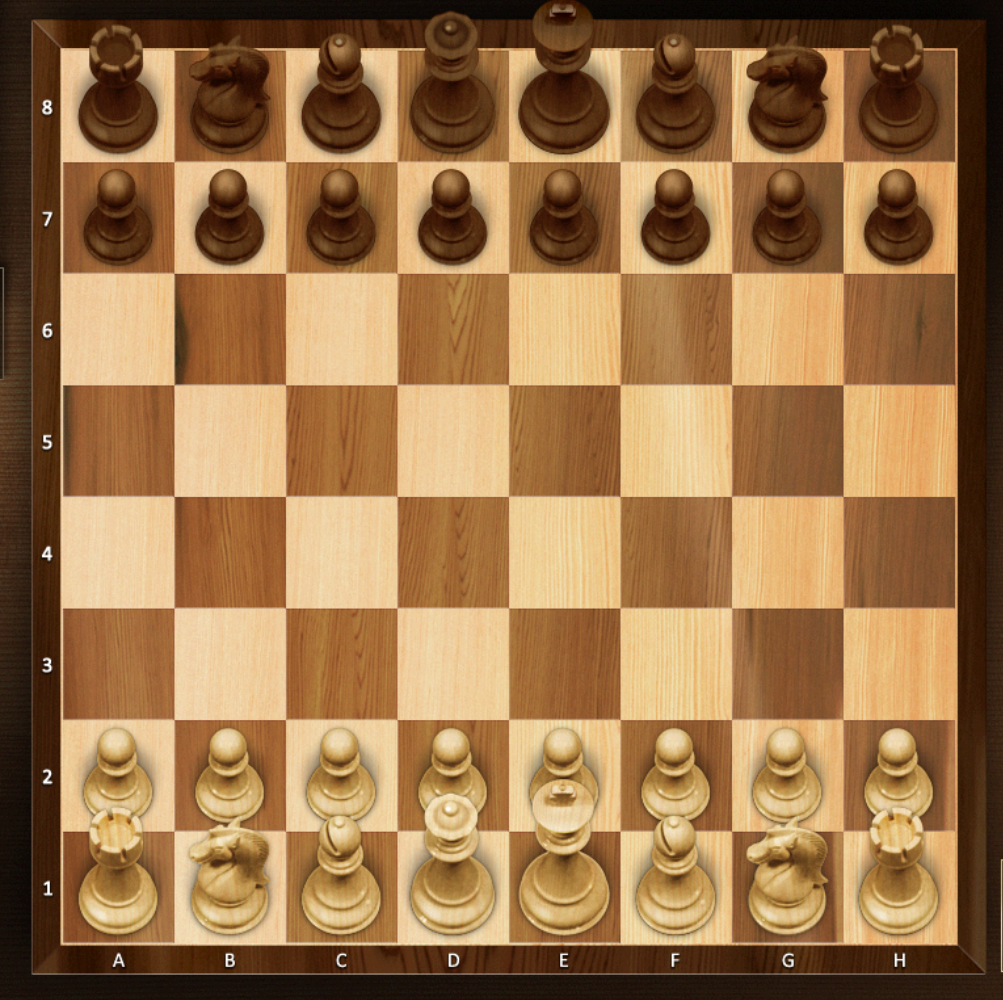
Chess starting moves


Chess has been something I have always been interested in learning and that why I chose to do greatest chess strategies as my IRP project. Chess has 3 phases: the opening, the middle game, and the endgame. In the opening pawns and minor pieces play very key roles.

There are 10 useful tips to help you succeed in the game
  1. Look at your opponent's move.
  2. Make the best possible move.
  3. Have a plan.
  4. Know what the pieces are worth.
  5. Develop quickly and well.
  6. Control the center.
  7. Keep your king safe.
  8. Know when to trade pieces.
  9. Think about the endgame.
  10. Always be alert.


I believe the best way to get started is with a good first move because often times the first move can decide everything that is why I will be focusing on opening moves in the first blog. In the book the book it says one of the best first moves is to attack the e5 pawn by doing so your opponents choices are very limited. This is the best opening move and the easiest to pull off

another great move to open with is called the "Spanish opening" which starts out by making 3 unique moves. shown in the picture to the right are the 3 moves White creates a potential pin of the d-pawn or Knight and starts an attack immediately, this is a very useful move to make.
Question: Do you think your opponents moves can effect how these moves are used or will you still be able to perfom them successfully?


Atttacking Soccer- Skills and drills for a high scoring offense

    I know you may think that soccer is an "overplayed" sport. But to a lot of people, soccer is their profession or a sport that helps through tough times. I myself played soccer for 5 years and honestly its a great sport, when you are playing it distracts you from the things that may be on your mind. Whenever you score, it is such a great feeling because you are running the whole time and right when you score, you get a overcome of happiness and relief. If you give soccer a try, believe me you will love it.
 
     When I was walking through Barnes and Noble, I didn't think I was going to buy a soccer book. When I walked into the store, I had my mind on a cooking book. Then I ran into a friend and he said he was buying a cooking book as well. Then it came to me that cooking books are such overused book and maybe I should a sports book. I was going up and down the shelves trying to find a good book and then I ran into this one. It caught my attention not only by the interesting cover but also when I grabbed the book, it gave me flashbacks of so many memories of when I played and it put a huge smile on my face. When it gave me flashbacks, I realized that I wanted to play again and why not get a book that explains good ways to play offense and tells you some great plays.

    The author isn't an inexperienced coach. Jay Miller has served as a national teams coach and coaching instructor of the United States Soccer Federation since 1978. With this information, you know that all the facts in the book are accurate and told by not one experienced man, but 11.

    When you open the book, the first couple of pages tell you where to find everything and specific plays that you maybe want to try out. But most importantly, it introduces what the book is about by stating, "The challenge of offense versus defense continues. As teams develop successful styles of attack, defenses are created and perfected to stop them. This book tackles the task of identifying and honing the skills and tactics necessary for breaking down organized defensive plans" (Miller 15). The author stated this because it shows that even though a team may have the best defensive plan, there is always a way to defeat them. Also that the challenges between offense and defense will continue and whenever a team comes up with a great idea, the other team will always find a way to counter play them.

     The next chapters are individual coaches telling their ways of a specific play or playing style. All the authors had great information and give their personal experiences in the beginning of the chapter. They provide diagrams of the specific play they are trying to explain and they have more than one in each chapter. They give tips on way to keep players in shape and how to deal with the environment, since soccer is played outside.

      The ending is just stopped after the last author gave his thoughts just like the others and there wasn't a huge conclusion like book usually have. The last few pages give information about every author who contributed to the book and why they were so significant to the book.

      From reading this book, I have to say that it is really useful and if you want to succeed and have great plays when you play soccer. I highly suggest this book, you get point of view from various authors and many diagrams dispersed throughout the book to really help a beginner out. If I ever start playing soccer again, I will definitely use this book.

  Q: Do you personally think that soccer is "overplayed"? Have you ever played soccer and do you ever just think back and realize how wonderful it was playing? If not, will you ever try playing soccer?


Snack Hacks- Ram Rice Bowl

If you're anything like me, you'll understand what it's like to be a picky eater. "This LITTLE lamb and its fluffy white fleece is simple yet delightful" in its own cute and unique way! There's no need to worry about crazy surprises in the bowl that you can't already see; perfect for the picky eaters. 

The main ingredients of the tiny ram, are rice and one boiled egg (use a quail egg and colored rice to make the shiny sheep just a tad bit more special!) The ornaments such as its eyes, mouth, horns and rosy cheeks are made with little cut scraps of ham and turkey; a wonderfully sweet combo! Would you think of giving it a taste??

Extra egg-stravagant pieces that could go along with our petite rice lamb are mini slices of cucumber shaped like treats for our sheep! It's a cute extension to the creation, and a delicious healthy veggie to balance the snack!

This ram rice bowl took a very short time to make, and is perfect for those beginners in cooking such as myself. Depending on who or for what occasion you would make this for, variances can occur in the ingredients you use (quail eggs opposed to regular chicken eggs, or seaweed as the funny faces opposed to the turkey or ham). Overall, it was a fun and decorative quick snack-hack that I would definitely recommend for you to try, whether you're the one making or eating it!


Photography - Keeping Everything In Focus

Keeping Everything In Focus: Gatcum, Chris. The Beginner's Photography Guide, 2nd Edition. New York: DK, 2016. Print.

"When you're presented with a stunning view, it's only natural to want everything in your photograph to be as sharp as it appears to the naked eye." (Gatcum, 56).


There are certain steps one must take to ensure that the picture you take are the sharpest they can be. To ensure that your photo is the best quality it can be, auto-focusing may be the way to go. The book I have helped explain how the amount of light given to a photo can affect how you focus. Where you take the picture from determines what is and is not in focus. Also the amount of time given to a photo, the shutter speed, will affect how clear or hazy a photo turns out. Taking a step back can help fit everything in shot, too. 


In this photo, I was in a situation where it was a very bright and sunny day, with a bit of cloud coverage. I choose to take my picture of the side of the building, facing my back to the harsh glare of the sun. It helped my lighting and I was able to take a nice, clear, focused photo.


What do you think is best for a quality photo - a photo with everything in focus and clear or a photo that is not focused or clear, yet has a narrative?